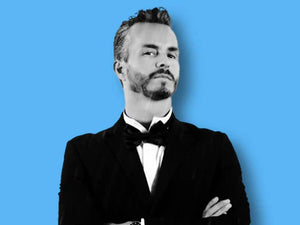

Davis Richardson
Davis Richardson is the founder of Paradox and is also the CEO of AUSP Inc., where he works to align American private-sector innovation with Ukraine's reconstruction and defense modernization efforts. Having recently joined the BASA Awards Judging Panel, Davis shared his perspectives on leadership, relationships, innovation, and the distinctly human side of business.
Your work spans government, technology, defense, culture, and investment. Can you explain what Paradox and AUSP Inc. do, and the role they play in bringing those worlds together?
At the core of what we do, we help clients achieve strategic results across multiple jurisdictions. Today, through Paradox and AUSP, we work across government, technology, defence, culture, and investment. We maintain relationships that are difficult to replicate, whether that's foreign ministers, defense executives, cultural institutions, or innovators working on frontier technologies.
Those relationships enable us to address complex challenges, support cultural diplomacy initiatives, strengthen soft power, and foster greater transatlantic cooperation between the United States and its allies.
As the name Paradox suggests, life is often about navigating contradictions. You cannot have light without darkness. We embrace complexity rather than avoiding it, and that mindset shapes the work we do every day.
As your career has progressed, how has your approach to leadership changed, and what principles guide the way you lead today?
My understanding of leadership has changed significantly over the years. Early in my career, I believed leadership meant having control over everything. While it's important for leaders to maintain visibility and accountability, I eventually realized that trying to control every detail can actually limit an organization's growth. Today, I think leadership is much more about empowerment. You have to provide people with the tools, resources, and confidence they need to succeed on their own. That also means giving them the freedom to make mistakes and learn from them. If every decision has to flow through one person, the business can never truly scale.
Ultimately, leadership is about setting the tone for the organization rather than trying to be involved in everything. That only works if you’re genuinely committed to what you’re building. You have to love what you do. Business is Darwinism, and if you don’t enjoy the work, it’s incredibly difficult to build something that lasts.
"You’ve got to love what you do. Business is Darwinism, and if you don’t love it, it’s going to be very difficult to do well in your respective industry."
Every entrepreneur has moments that reshape the way they think. Was there a particular experience that changed how you viewed the future of technology and innovation?
There have been several moments throughout my career that shifted my perspective, but one of the most significant came through my involvement with Ukraine. What began as a personal and spiritual journey gradually evolved into a business and investment focus. The turning point came when I attended a BRAVE1 Defense Tech Valley event and saw firsthand the technologies being developed there. Looking at what was being built, I realized there was something much bigger taking shape. It became clear that this wasn’t simply a response to immediate circumstances, but the beginning of something with the potential to become one of the most consequential markets in the world and to drive a major shift in military affairs.
That realization led us to make significant strategic moves as a firm, investing in the companies and teams we believed were shaping that future, and becoming part of what is rapidly emerging as one of the world’s most important areas of innovation.
There are certain aspects of human nature that remain constant over time. No matter how much innovation is happening, or how significant the current wave of AI becomes, everything still depends on the relationships you build with other people. Business is, at its core, a human endeavor. Trust, credibility, and strong relationships remain at the center of how opportunities are created and organizations grow. The real challenge is maintaining those relationships through difficult periods, long after the honeymoon phase is over.
It’s important that small businesses keep pace with the changes AI is bringing. In many ways, I think that’s a positive development. We’re seeing a democratization of tools that puts powerful knowledge and capabilities within reach of almost anyone, often at little or no cost. While AI will undoubtedly bring disruption, it also creates opportunities to experiment, adapt, and discover where industries are heading next. I think awards play an important role because they give people something to measure themselves against. While there are always criteria and judging standards, the best work usually has something that goes beyond the scorecard. It’s often the campaign that makes you stop, think, and remember it long after you’ve seen it.
That’s what I’m looking forward to as a BASA Awards judge, because building a business is such a personal journey where every success, every setback, and every lesson stays with you. When someone enters an award, they’re putting forward something they’ve invested a huge amount of time and energy into. That takes confidence, but it also takes courage, and I have a lot of respect for people who are willing to do that.Technology is evolving rapidly, but business is still fundamentally about people. How do you see AI and innovation changing the way public relations professionals build trust and relationships?
As an entrepreneur working at the intersection of innovation and investment, what perspective do you hope to bring to the BASA Awards judging panel?
For more information about Davis Richardson, Paradox, and AUSP Inc., visit Paradox and AUSP Inc.


MEET THE JUDGES

Xile He
We recently welcomed Xile He to the BASA Awards Judging Panel. As Head of Gro...
Steph Briggs
We recently welcomed Steph Briggs to the BASA Awards Judging Panel. Founder o...
Stacey Ross Cohen
Stacey Ross Cohen is the CEO of Co-Communications, an author, speaker, educat...
Seva Ustinov
We recently welcomed Seva Ustinov to the BASA Awards Judging Panel. As the fo...
Scott Pipitone
We recently welcomed Scott Pipitone to the BASA Awards Judging Panel. As CEO ...
Heather Holmes
We recently welcomed Heather Holmes to the BASA Awards Judging Panel. Heather...
Dr. Tamara Nall
The BASA Awards recently welcomed Dr. Tamara Nall to the BASA Awards Judging ...
Davis Richardson
Davis Richardson is the founder of Paradox and is also the CEO of AUSP Inc., ...
Catherine Delcin-Zilpa
Catherine Delcin-Zilpa is the founder of Delcin Consulting Group, a boutique ...
Annie P. Ruggles
The BASA Awards recently welcomed Annie P. Ruggles to our Judging Panel. A st...
Akhil Verghese
We recently welcomed Akhil Verghese to the BASA Awards Judging Panel. As co-f...
Michele Allen
Nitin Kishen
Dennis Galletti
Awais Sher Bajwa
Sharon Bonner
Jessica Willis
Kellie Dyer
Devon Montgomery Pasha
Ashish Kedia

Ramlakshmi Murugan
Dr. Rod Segnini
Dr. Tejesh Reddy Singasani
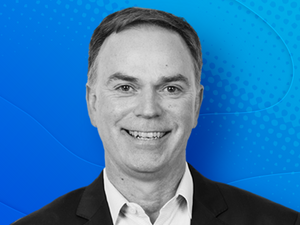
Derrin Brown
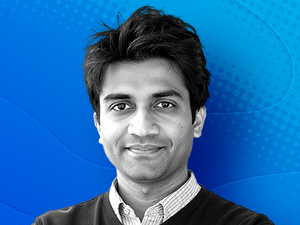
Nikhil Patil
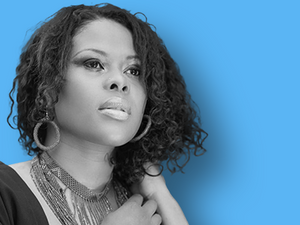
Tania Tome
Tania is a highly accomplished and multifaceted professional known for her ex...
Dennis Reno
Customer Experience and Customer Success Executive with 30+ years of professi...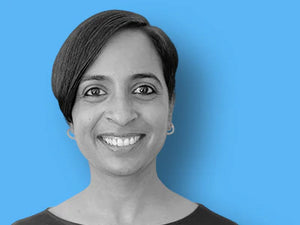
Sudha Ranganathan, LinkedIn
Sudha, a seasoned professional with 18 years of experience at P&G, Nielse...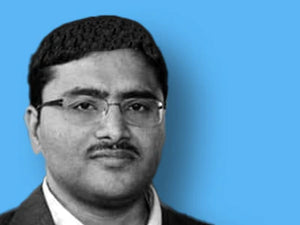
Sumit Sanwal, American Express
Sumit is an IT leader, with 20+ years of experience in top leading financial ...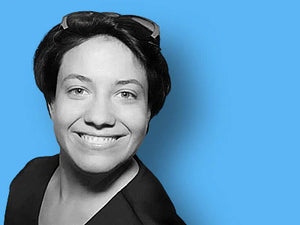
Sir. Cristiana Tudor, Greatness Media
Sir. Cristiana is a seasoned branding and storytelling educator whose goal is...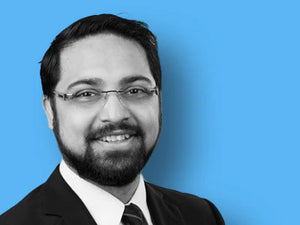
Param Singh, Oberon Securities
Param is an accomplished Vice President at Oberon Securities, leveraging over...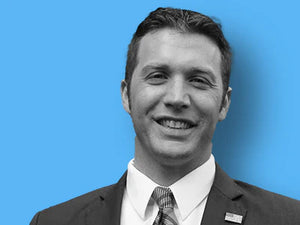
Tom DuFore, Big Sky
Dr. Tom DuFore is the CEO of Big Sky Franchise Team, where he is responsible ...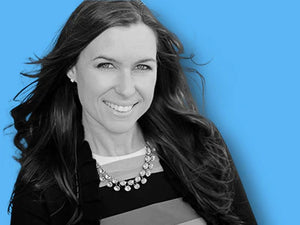
Jessica Tiller, Pugh & Tiller PR
Jessica is a PR executive with two decades of public relations experience dev...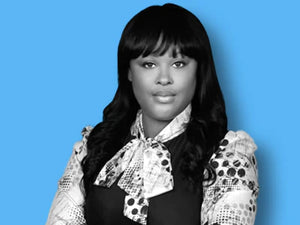
Mia Still Osorno, MSN Talent
Mia Still Osorno is the CEO and founder of MNS Talent and Consulting, 9 to Th...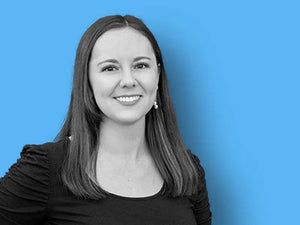
Rachel Russell, EY
I connect with business leaders of high-growth companies and strategically po...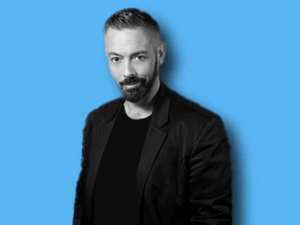
Matteo Osso, QVC TV
Matteo is a TV personality, radio host, and personal branding expert.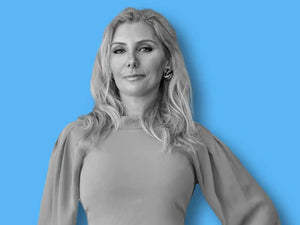
Anna Stella, BBSA
Two-time national award-winning marketing expert, academic researcher.