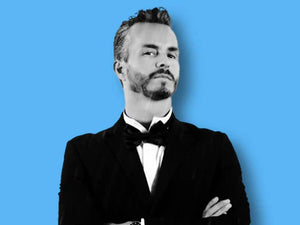

Stacey Ross Cohen
Stacey Ross Cohen is the CEO of Co-Communications, an author, speaker, educator, and advocate for personal branding. She recently joined the BASA Awards Judging Panel and shared her insights on leadership, communication, and standing out in an increasingly crowded world.
Stacey, you’ve built Co-Communications over nearly three decades, starting with a background in media and advertising. What first drew you to this work, and how has your vision for the agency changed since 1998?
What first drew me to this work was a long-standing fascination with communication: why certain messages resonate with people while others do not. Before launching Co-Communications in 1998, I worked at CBS and in the advertising industry, and those experiences helped shape my approach to marketing, communications, and brand strategy.
Over time, that original curiosity grew into something broader. Co-Communications began as a full-service marketing and communications agency, and my work has since expanded into writing, teaching, public speaking, and helping both organizations and individuals build stronger brands.
You’ve seen the marketing and communications industry evolve over nearly three decades. What do you see as the biggest changes, and what do businesses need to do differently today to stay relevant?
In many ways, today’s environment reminds me of the early days of the internet. There was a lot of uncertainty, everything was changing quickly, and it felt like the rules were being written as we went. I think we’re seeing something very similar with AI today.
The biggest change is the sheer volume of information competing for people’s attention. Consumers are overwhelmed with messages every day, which means businesses can no longer afford to blend in or rely on generic marketing. More than ever, they need to communicate clearly what sets them apart and why customers should choose them over the competition. If that value isn’t obvious from the outset, people will simply move on. That’s why differentiation has become more important than ever.
"Every brand and every entrepreneur needs to answer one question clearly: Why should someone choose you?"
AI is reshaping the marketing industry at an extraordinary pace. How do you see the relationship between artificial intelligence, creativity, and strategic thinking evolving?
AI still feels a little like the “Wild West.” We’re all navigating it in real time, which is why it’s so important to use it ethically and responsibly. In our agency, we use AI to improve efficiency and streamline certain processes, but we’re careful not to let it replace the strategic thinking, creativity, and human insight that great communications depend on. That means AI should support the work, not define it. While technology can generate content, it can’t replace judgment or experience, and we’ve even had clients submit AI-generated work that simply wasn’t good enough to put our name behind. At the end of the day, everything comes back to reputation. The work can’t just be good; it has to be great.
That’s why strategy remains so important. One of the biggest mistakes businesses make is jumping straight into tactics without first understanding their audience, positioning, or competitive environment. AI can support execution, but it can’t replace strategic thinking.
"Technology can accelerate the work, but it cannot replace the thinking behind it."
If you were advising a small business today, what would you tell them about building a brand that people genuinely trust and remember?
Small businesses are all subject matter experts in something, whether that is law, sustainability, or a niche service area. But expertise alone is no longer enough. People do business with people they know, like, and trust, and especially in smaller businesses, decisions are often driven as much by emotion and trust as by logic.
That’s why the CEO or founder has to be visible. You have to be out there building a brand that people can connect with on a human level, and that means developing thought leadership. It can take many forms, from writing articles and speaking to appearing on podcasts, entering awards, and engaging with communities. There are many ways to do it, but the key is to show up consistently.
You’ve built a successful career in marketing and communications. As you look ahead, what excites you most about this next chapter?
I’m currently working on another book, this time on storytelling, which I’m co-authoring with my twin sister, a professor at Johns Hopkins University who teaches storytelling. The project grew out of conversations about how marketing is changing with AI and why storytelling is becoming even more important, not less.
As AI generates more and more content, authentic human storytelling becomes the differentiator. We’re already seeing roles like Chief Storytelling Officer emerging, with companies actively hiring for storytelling skills. That’s why this project sits at the intersection of education, marketing, and the future of communication. For me, it also connects to something very personal: finding your own identity and voice. That is ultimately what storytelling is.
For more information about Stacey Ross Cohen and Co-Communications, visit Co-Communications.


MEET THE JUDGES

Xile He
We recently welcomed Xile He to the BASA Awards Judging Panel. As Head of Gro...
Steph Briggs
We recently welcomed Steph Briggs to the BASA Awards Judging Panel. Founder o...
Stacey Ross Cohen
Stacey Ross Cohen is the CEO of Co-Communications, an author, speaker, educat...
Seva Ustinov
We recently welcomed Seva Ustinov to the BASA Awards Judging Panel. As the fo...
Scott Pipitone
We recently welcomed Scott Pipitone to the BASA Awards Judging Panel. As CEO ...
Heather Holmes
We recently welcomed Heather Holmes to the BASA Awards Judging Panel. Heather...
Dr. Tamara Nall
The BASA Awards recently welcomed Dr. Tamara Nall to the BASA Awards Judging ...
Davis Richardson
Davis Richardson is the founder of Paradox and is also the CEO of AUSP Inc., ...
Catherine Delcin-Zilpa
Catherine Delcin-Zilpa is the founder of Delcin Consulting Group, a boutique ...
Annie P. Ruggles
The BASA Awards recently welcomed Annie P. Ruggles to our Judging Panel. A st...
Akhil Verghese
We recently welcomed Akhil Verghese to the BASA Awards Judging Panel. As co-f...
Michele Allen
Nitin Kishen
Dennis Galletti

Awais Sher Bajwa
Sharon Bonner
Jessica Willis
Kellie Dyer
Devon Montgomery Pasha
Ashish Kedia

Ramlakshmi Murugan

Dr. Rod Segnini
Dr. Tejesh Reddy Singasani
Derrin Brown

Nikhil Patil
Tania Tome
Tania is a highly accomplished and multifaceted professional known for her ex...
Dennis Reno
Customer Experience and Customer Success Executive with 30+ years of professi...
Sudha Ranganathan, LinkedIn
Sudha, a seasoned professional with 18 years of experience at P&G, Nielse...
Sumit Sanwal, American Express
Sumit is an IT leader, with 20+ years of experience in top leading financial ...
Sir. Cristiana Tudor, Greatness Media
Sir. Cristiana is a seasoned branding and storytelling educator whose goal is...
Param Singh, Oberon Securities
Param is an accomplished Vice President at Oberon Securities, leveraging over...
Tom DuFore, Big Sky
Dr. Tom DuFore is the CEO of Big Sky Franchise Team, where he is responsible ...
Jessica Tiller, Pugh & Tiller PR
Jessica is a PR executive with two decades of public relations experience dev...
Mia Still Osorno, MSN Talent
Mia Still Osorno is the CEO and founder of MNS Talent and Consulting, 9 to Th...
Rachel Russell, EY
I connect with business leaders of high-growth companies and strategically po...
Matteo Osso, QVC TV
Matteo is a TV personality, radio host, and personal branding expert.
Anna Stella, BBSA
Two-time national award-winning marketing expert, academic researcher.